BUZZITENT
BUZZISPACE
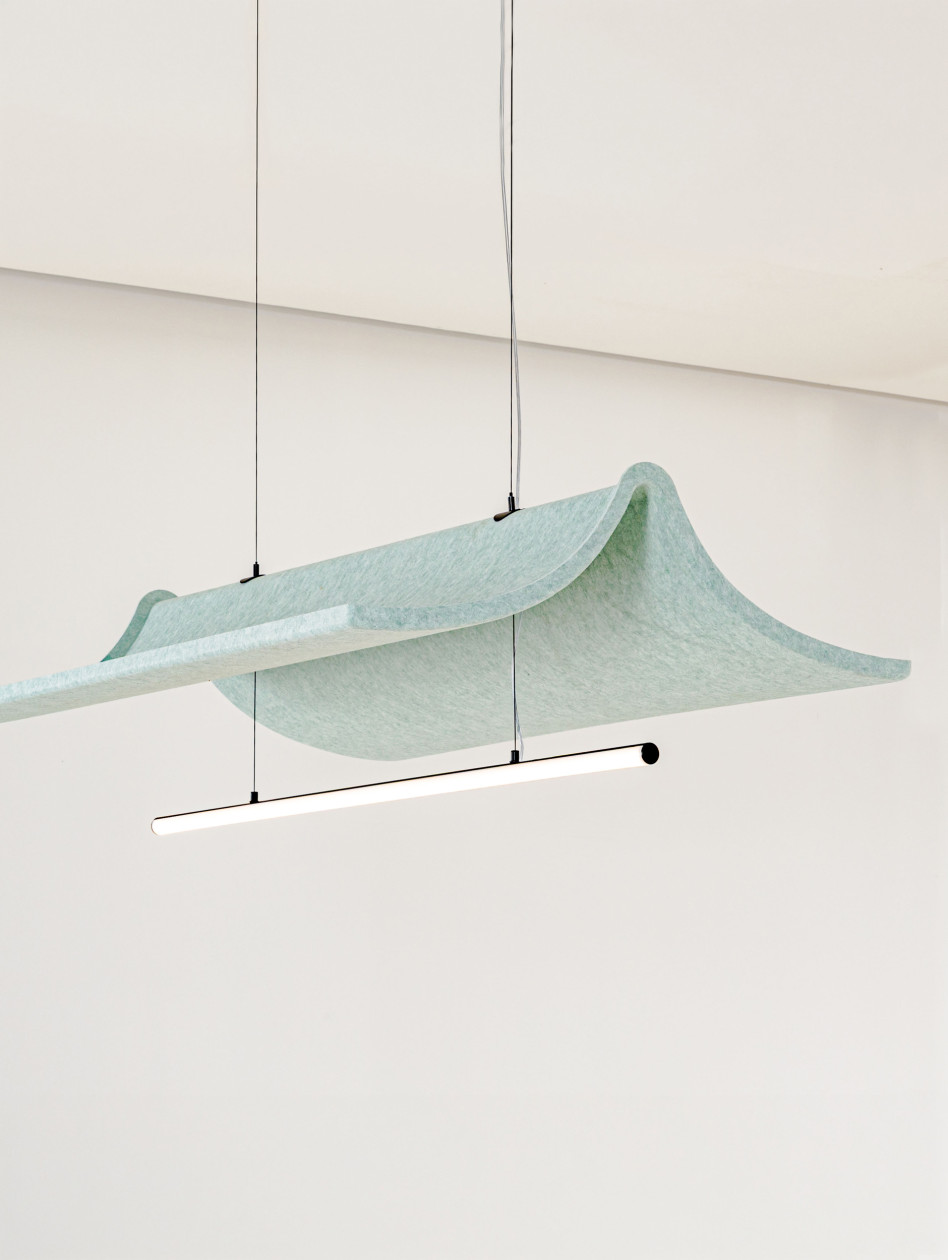
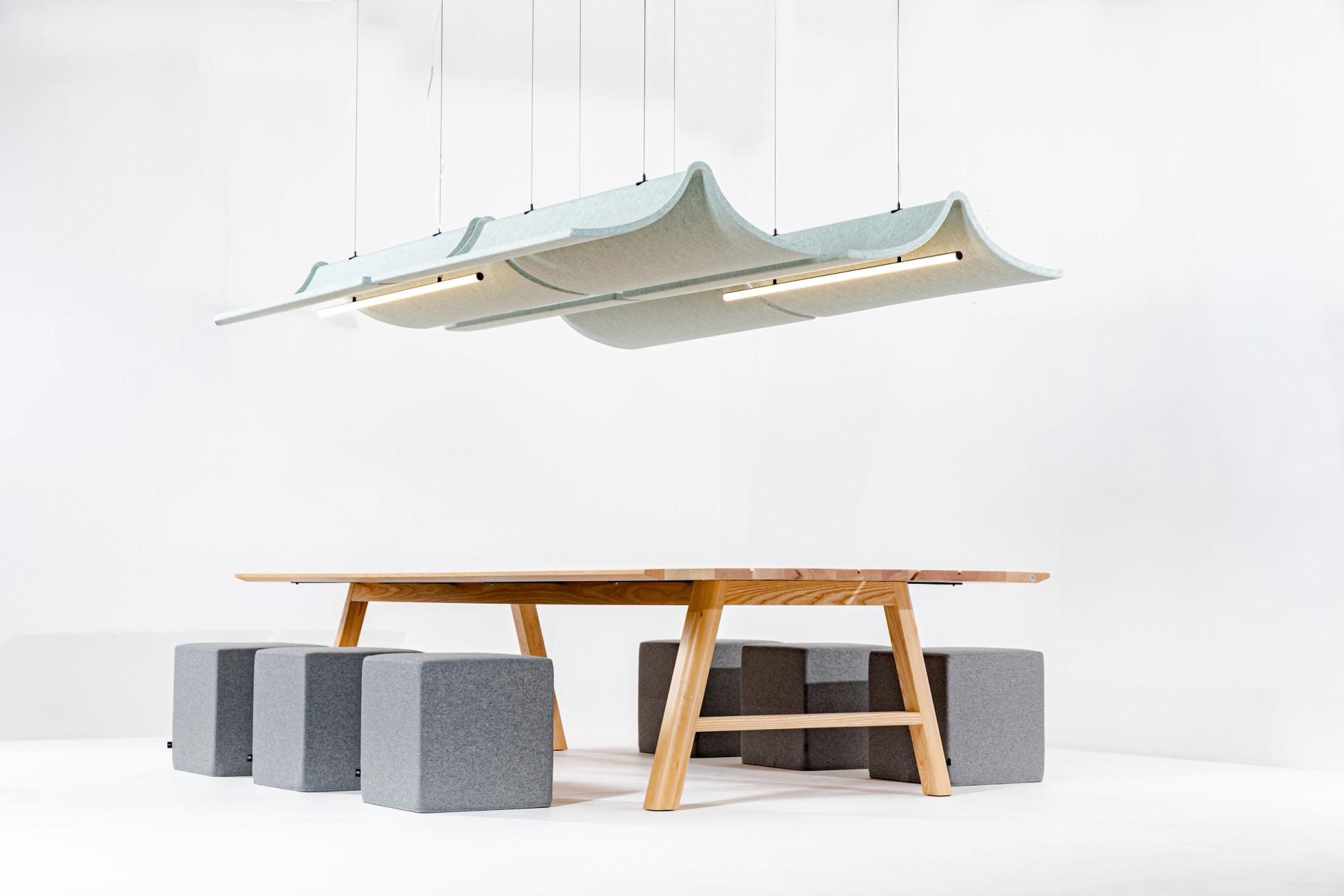
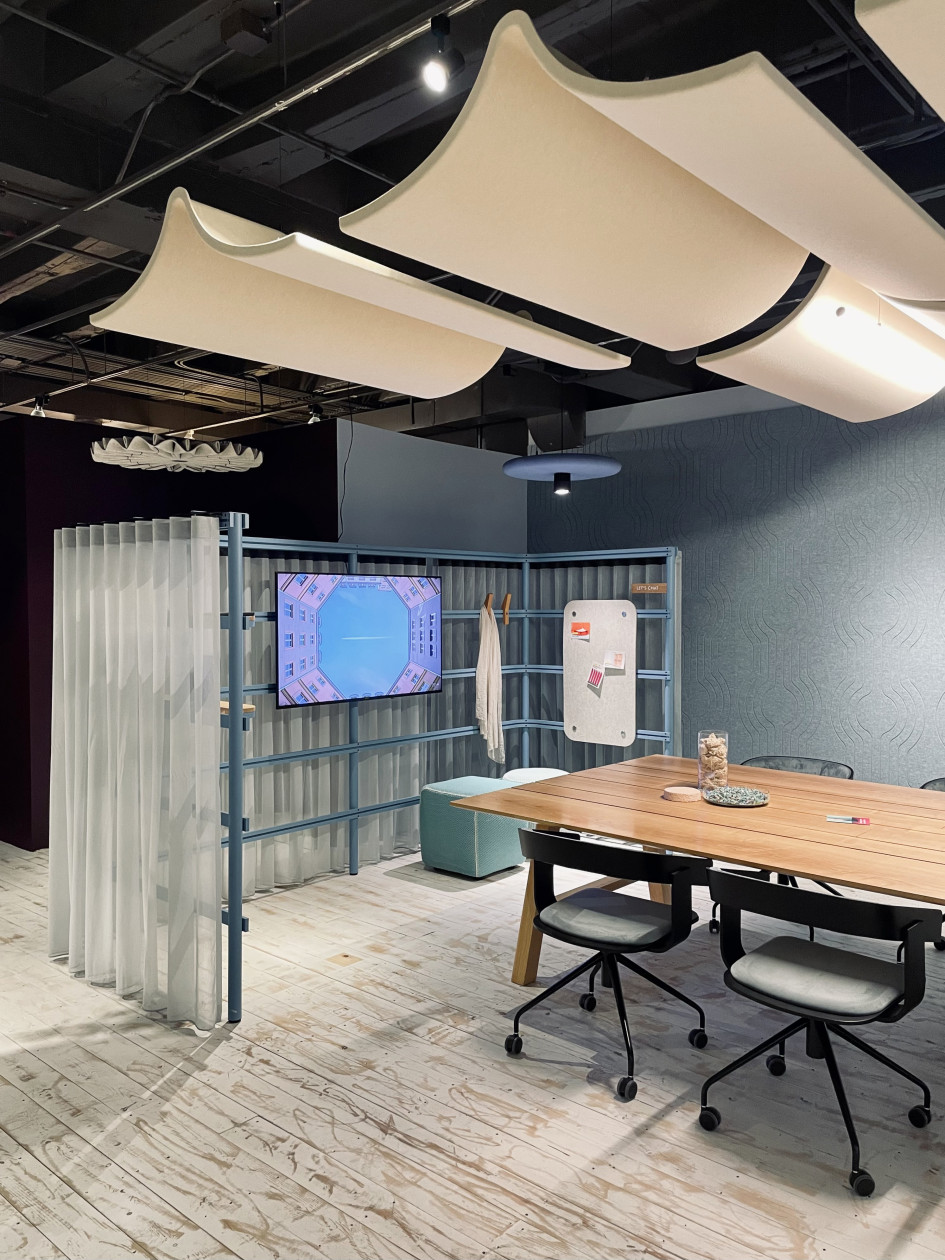
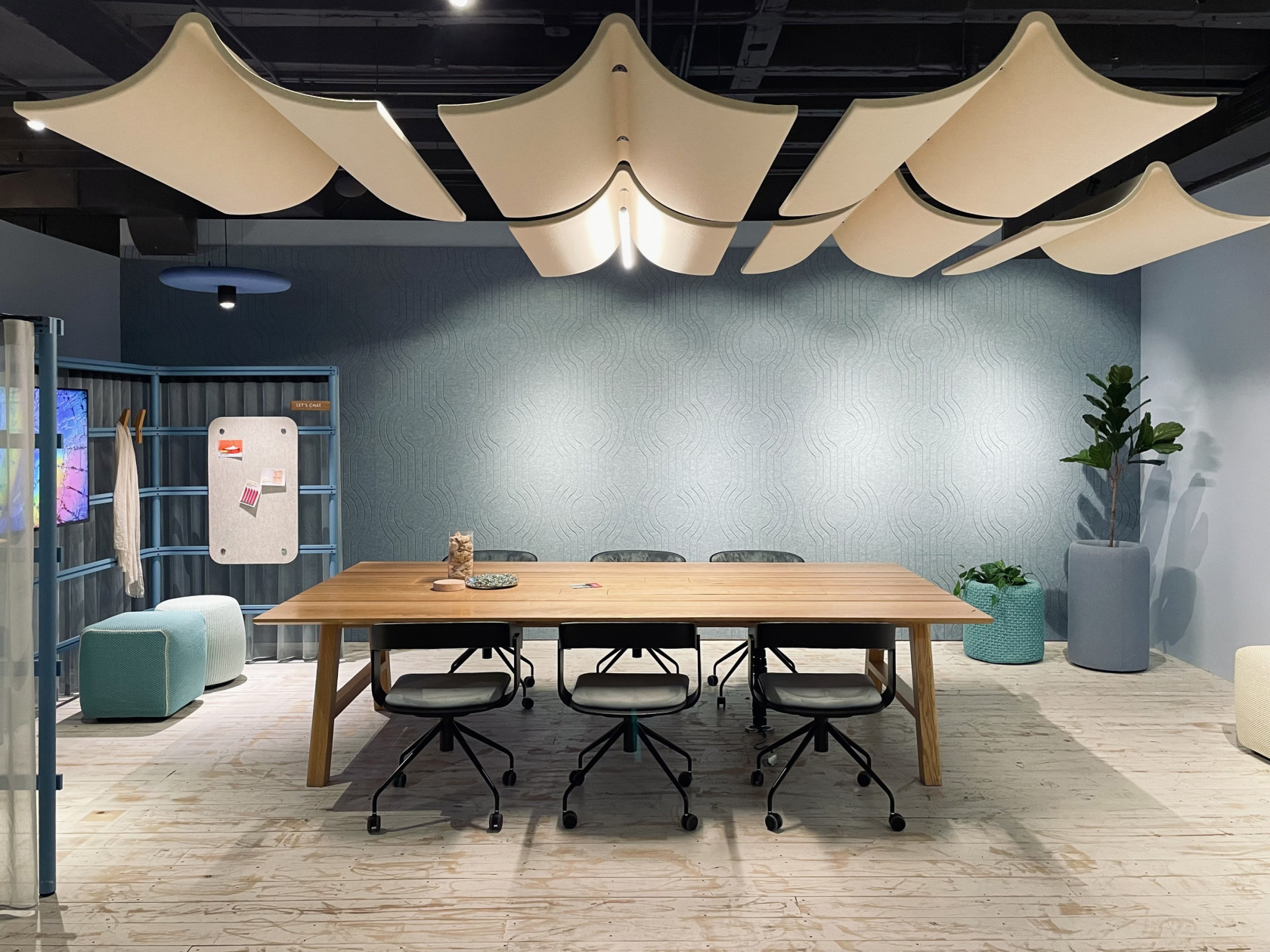
The BuzziTent collection evokes the feeling you have when you take refuge under a large tent or canopy to protect yourself from the sun or rain, or to socialize or sleep in an enclosed space. The collection references an archetype: the movement of fabric gently dropping around the metal spine that supports the tent. This concept has been transformed into a lampshade with acoustic properties that shields your eyes from the lamp's glare. The structure can also be used as a modular acoustic ceiling panel.
The idea is to transport people elsewhere, even though they’re still in the office. The BuzziTent’s structure is full of curves and soft lines, which hopefully soften communication and interactions between people.
The BuzziTent is alos inspired by the French "guinguette," an open-air café, tavern, or dance hall. These makeshift structures are built during the summer months, usually along a river on the outskirts of cities. They are places to enjoy the summer and beat the heat. They are usually partly covered by a light textile canopy with a rhythmic quality due to the waves created by the fabric where there is a horizontal pole supporting it. The term also refers to a specific time of year and time of day when people connect more easily. So, when used in a different setting, such as an office, it transports you to another time in life when people interact more easily.
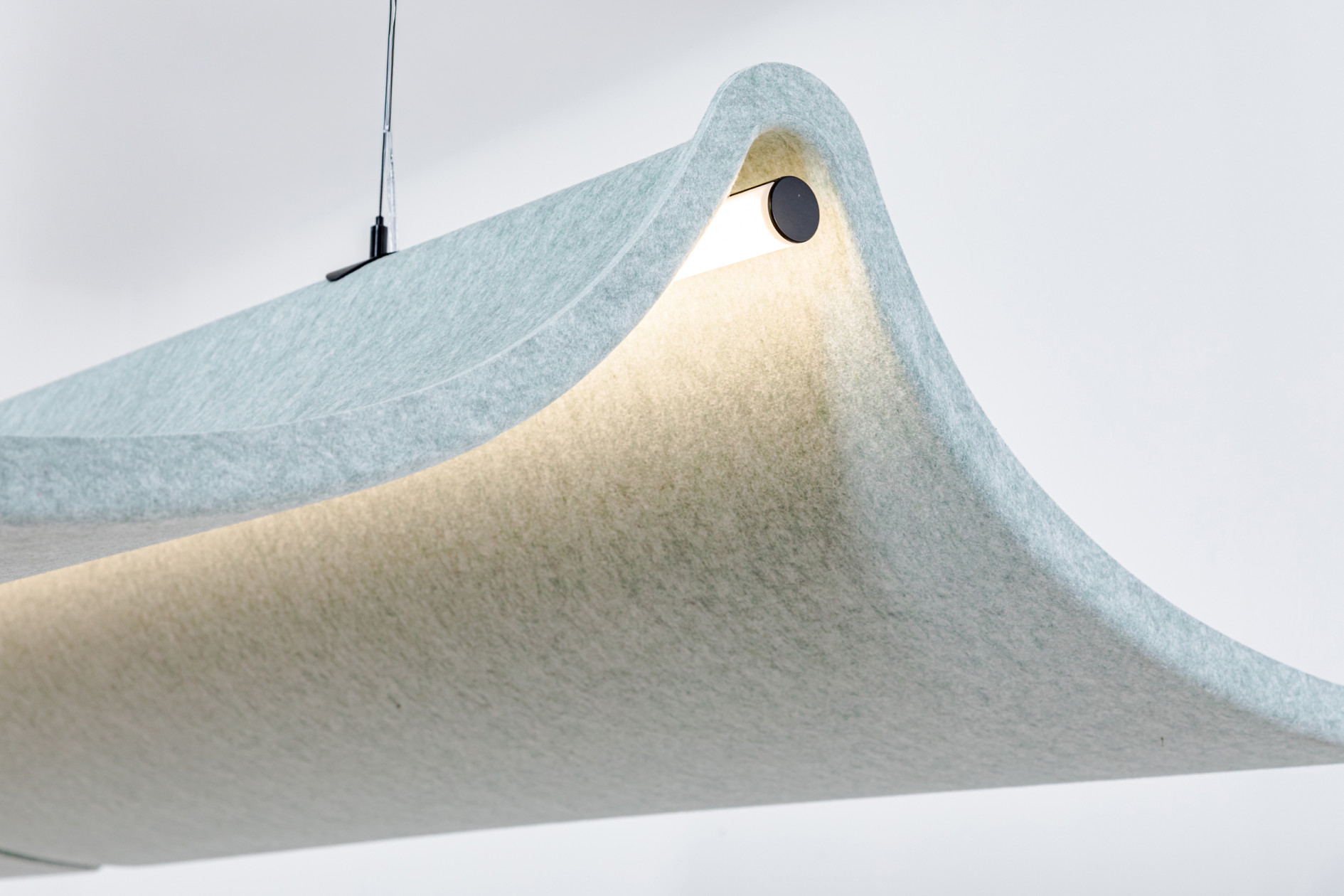
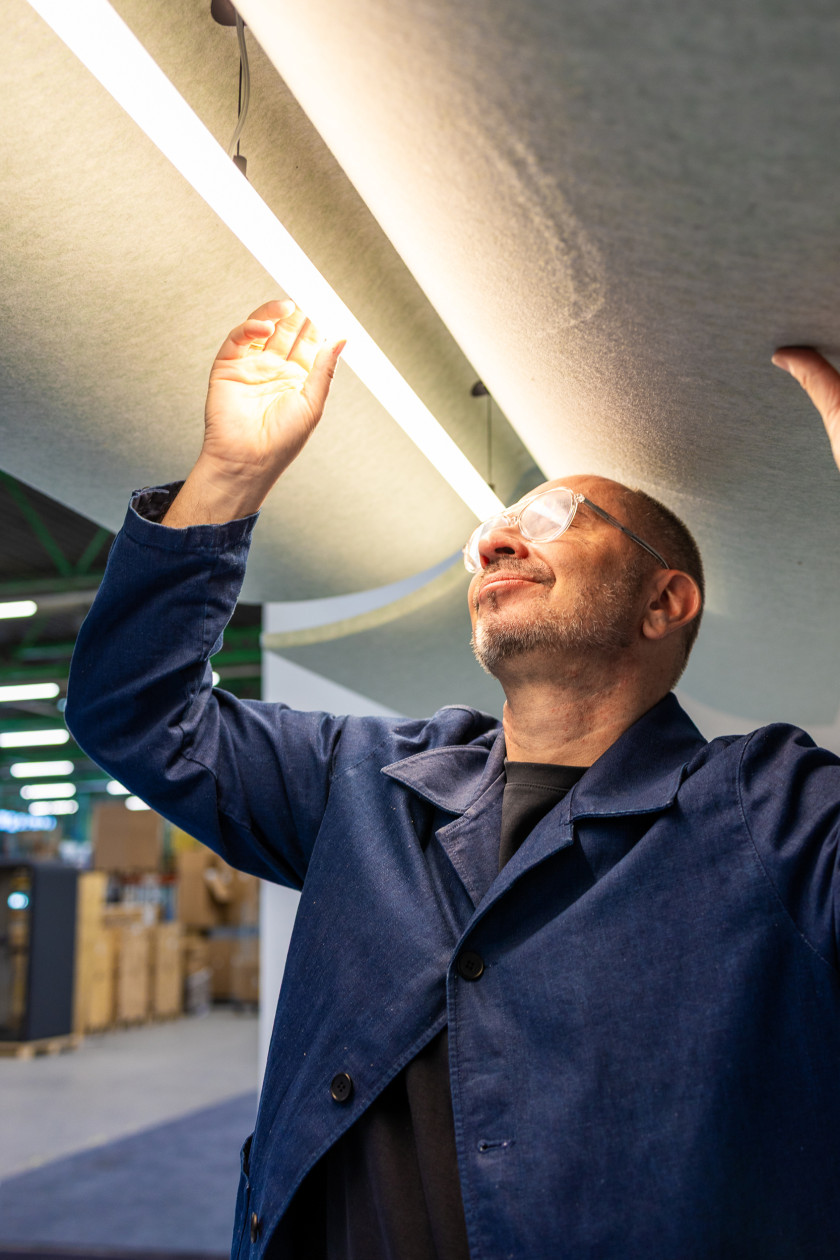
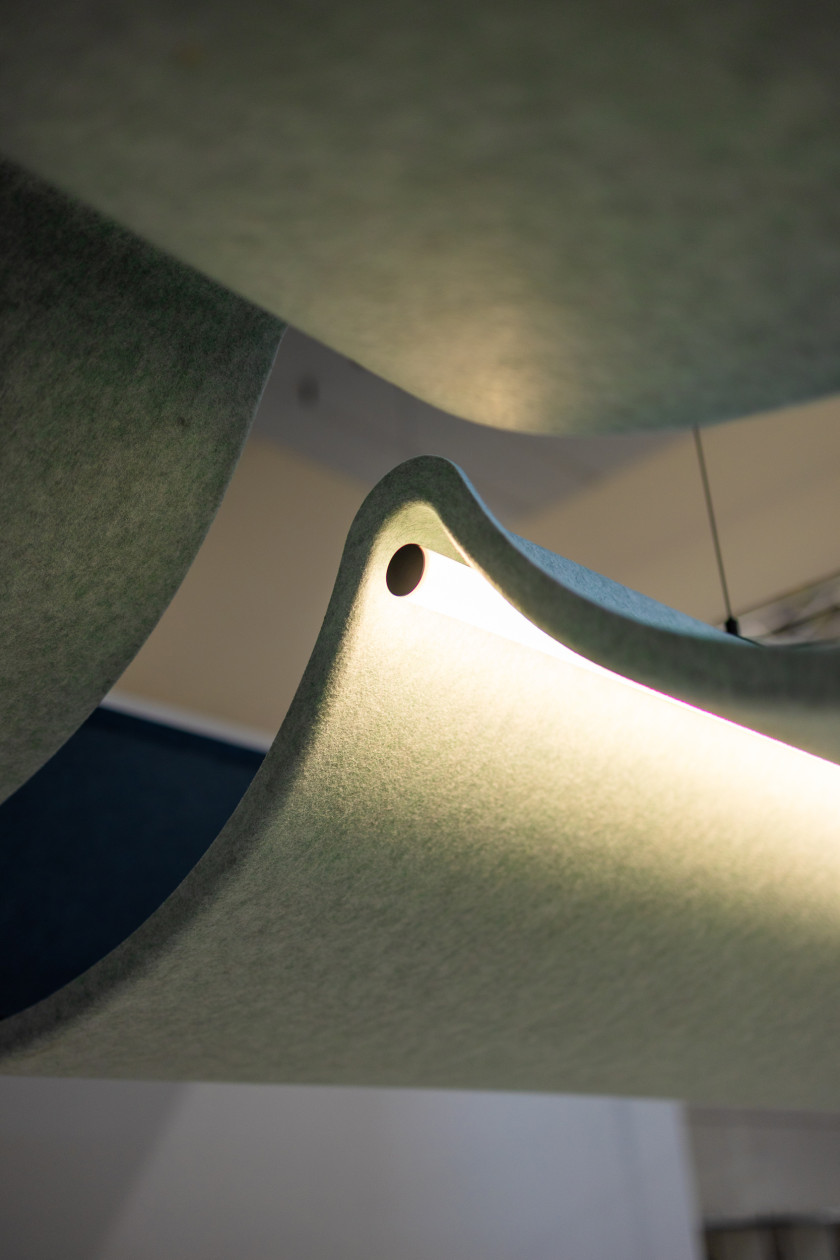
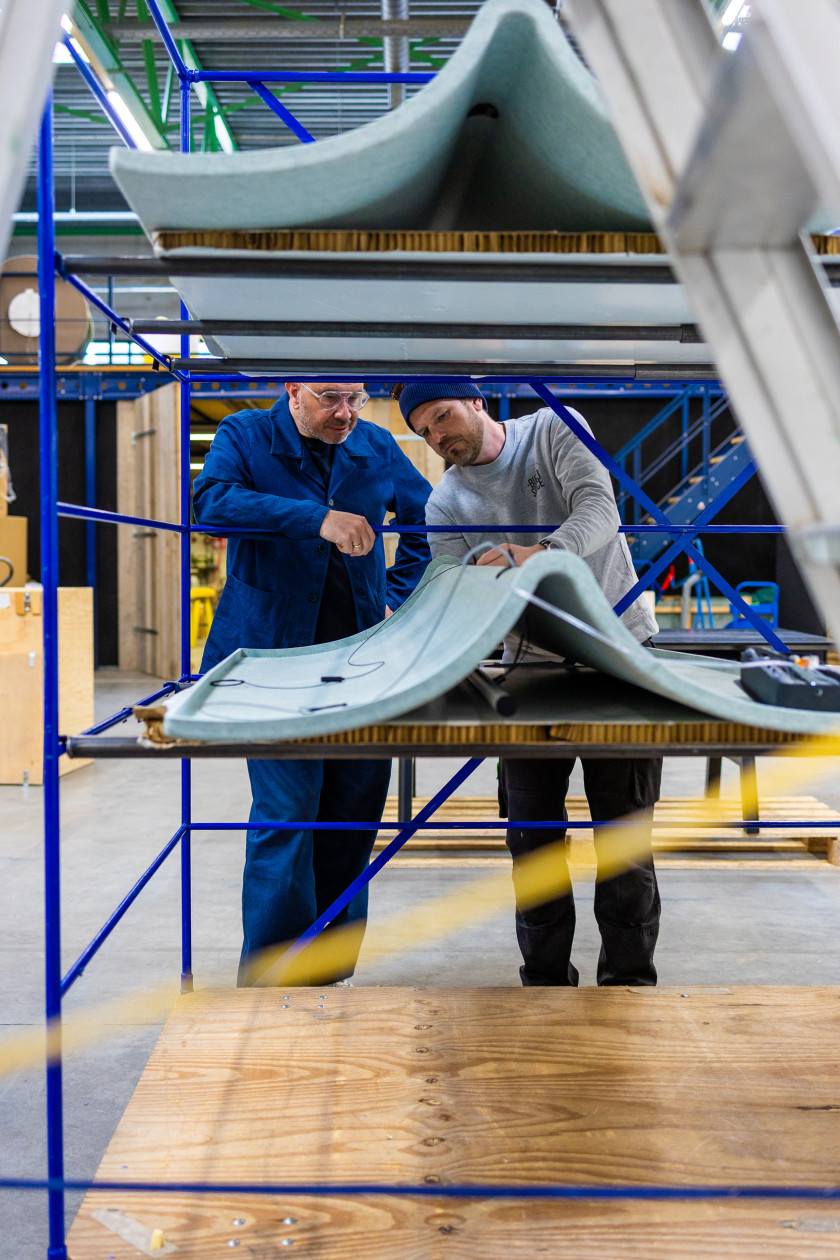
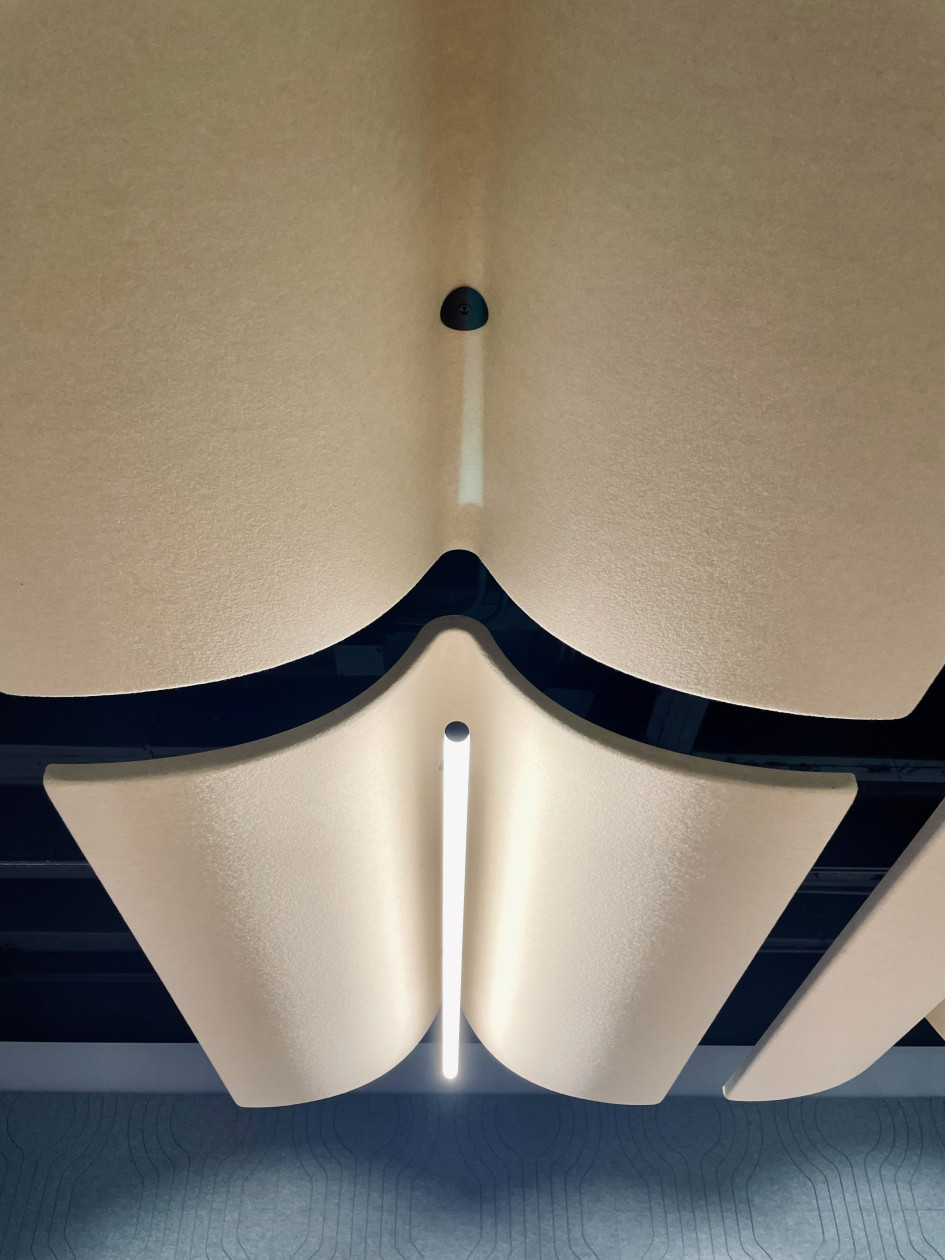
A large module made of recycled PET is molded into shape. Its center is like curved around the tube of the lighting fixture, which can be raised or lowered to create a wider or smaller cone of light. When lowered, the LED tube appears to float inside the acoustic lampshade.
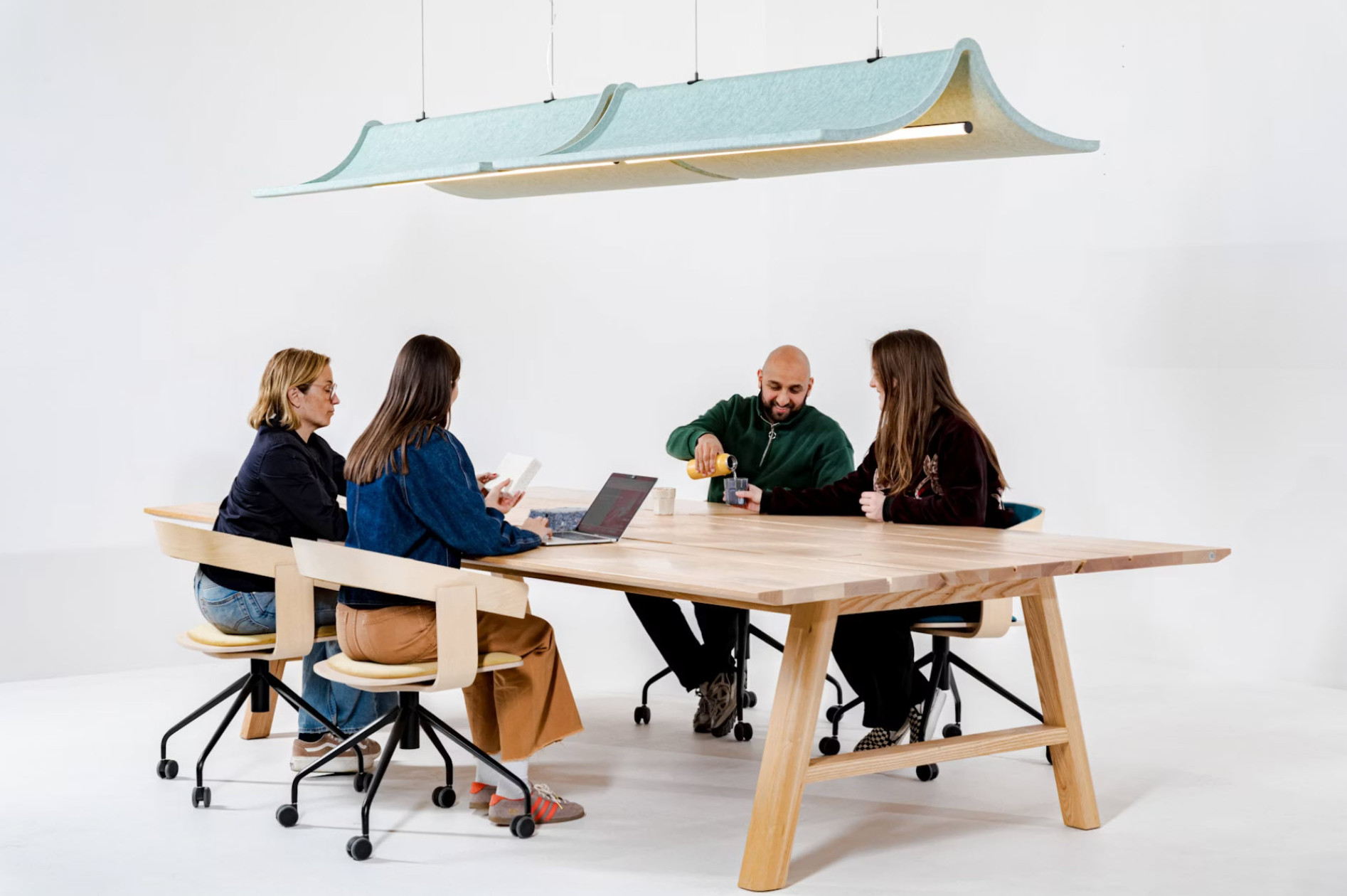
The lampshade gives off the impression of a soft, protective shape. When placed above a table, it is meant to be visually appealing and define a quieter space in the room. Different lampshades can be connected to form a row of lamps or acoustic modules, as if extruded from a mold.
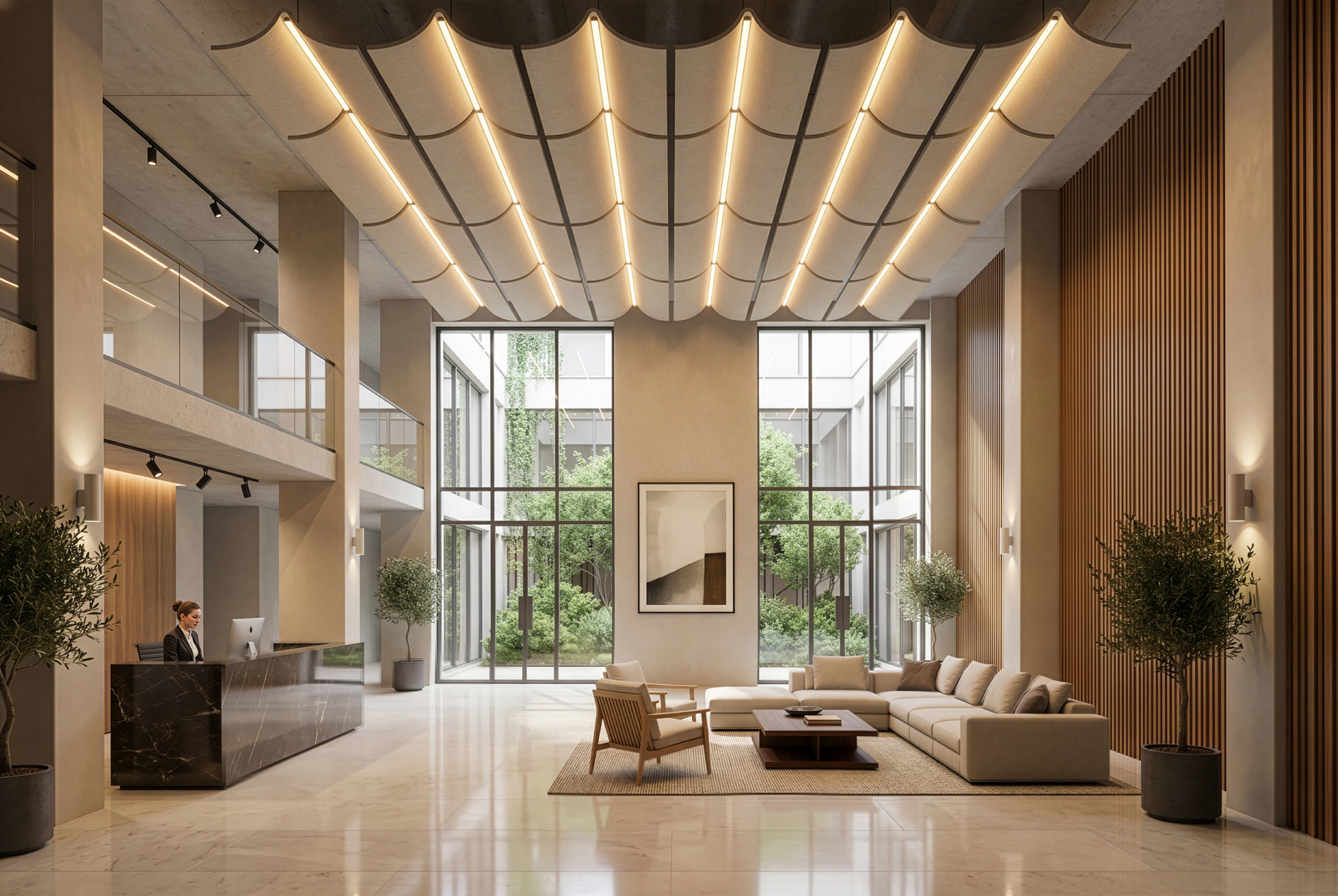
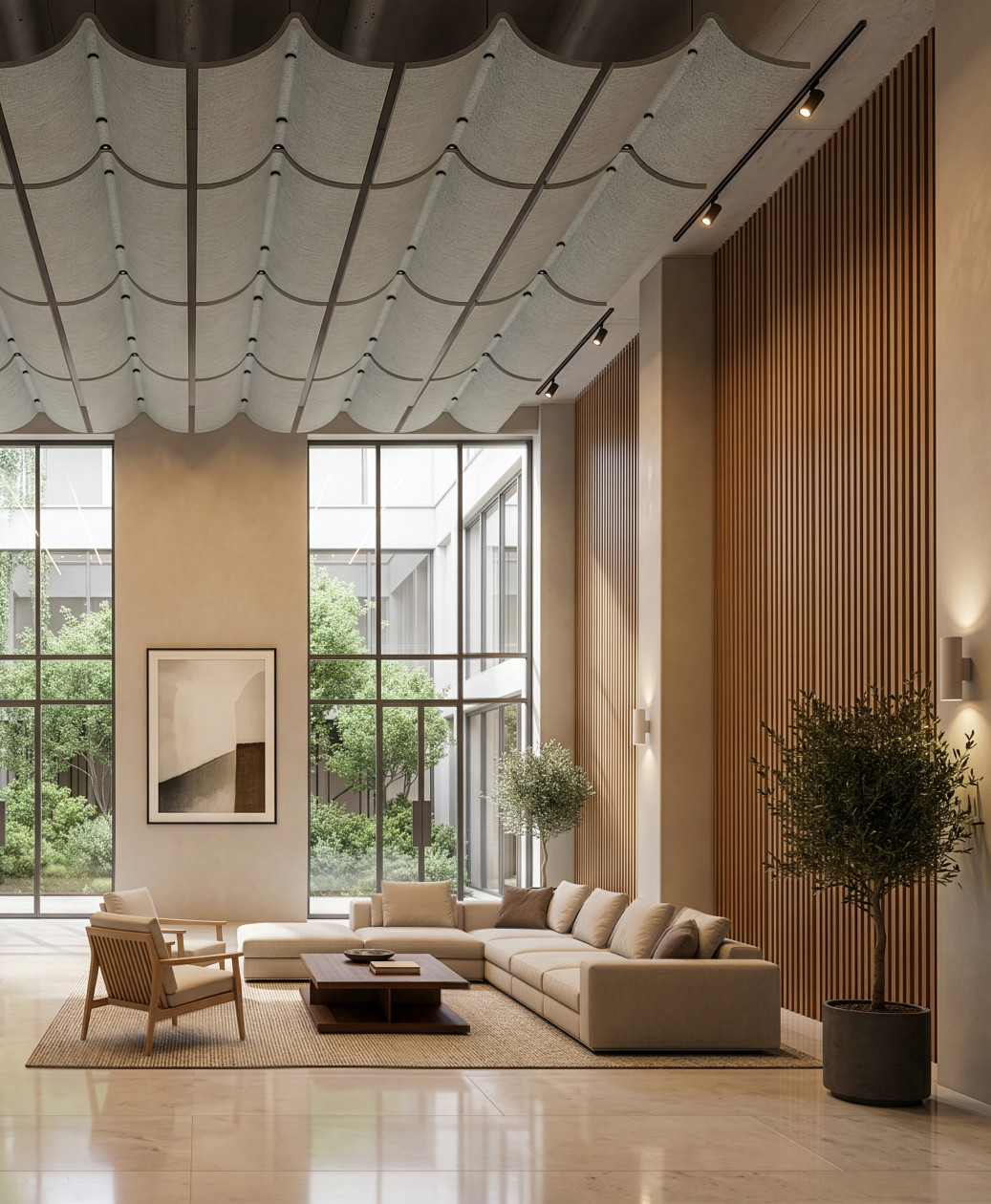
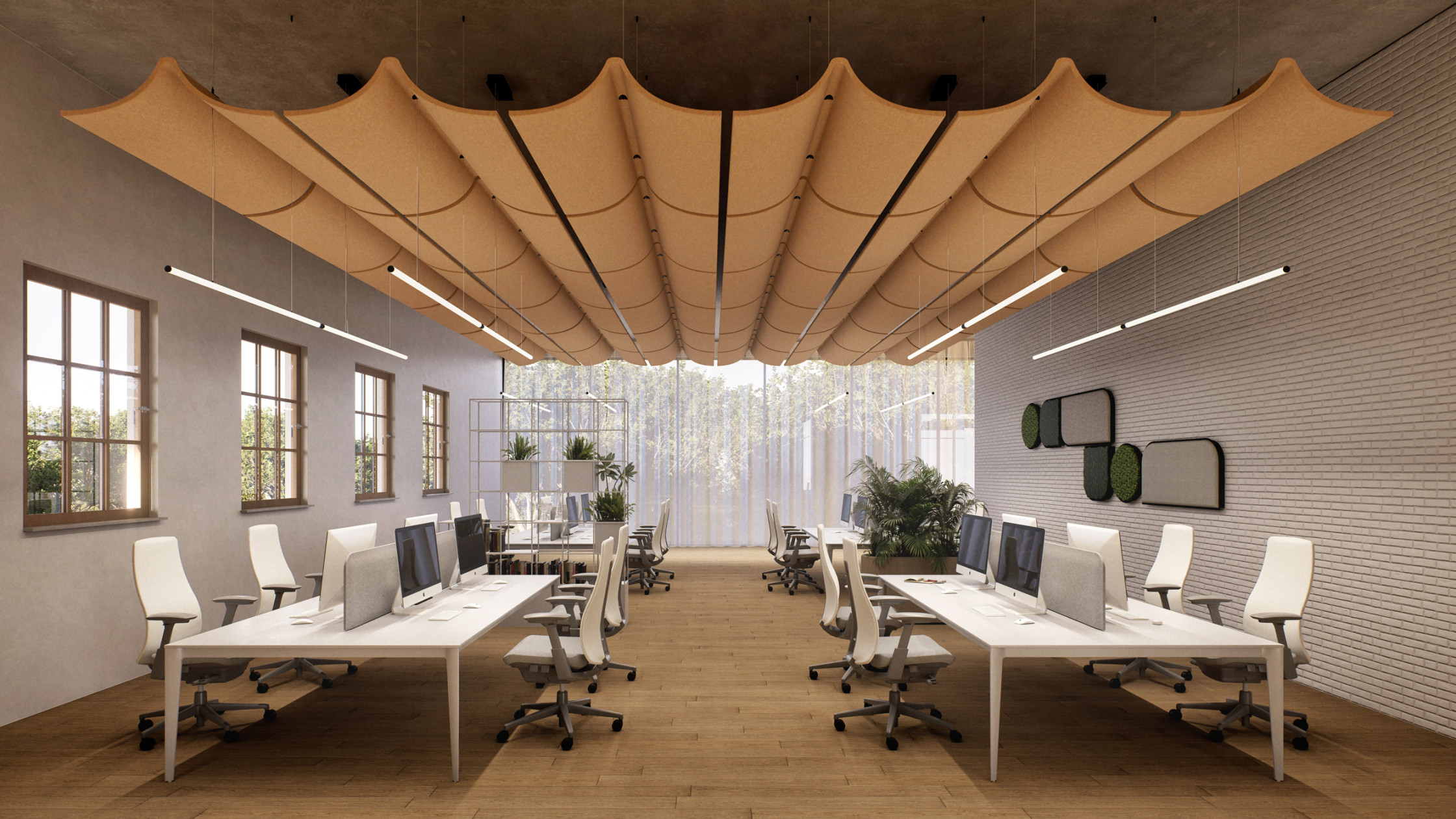
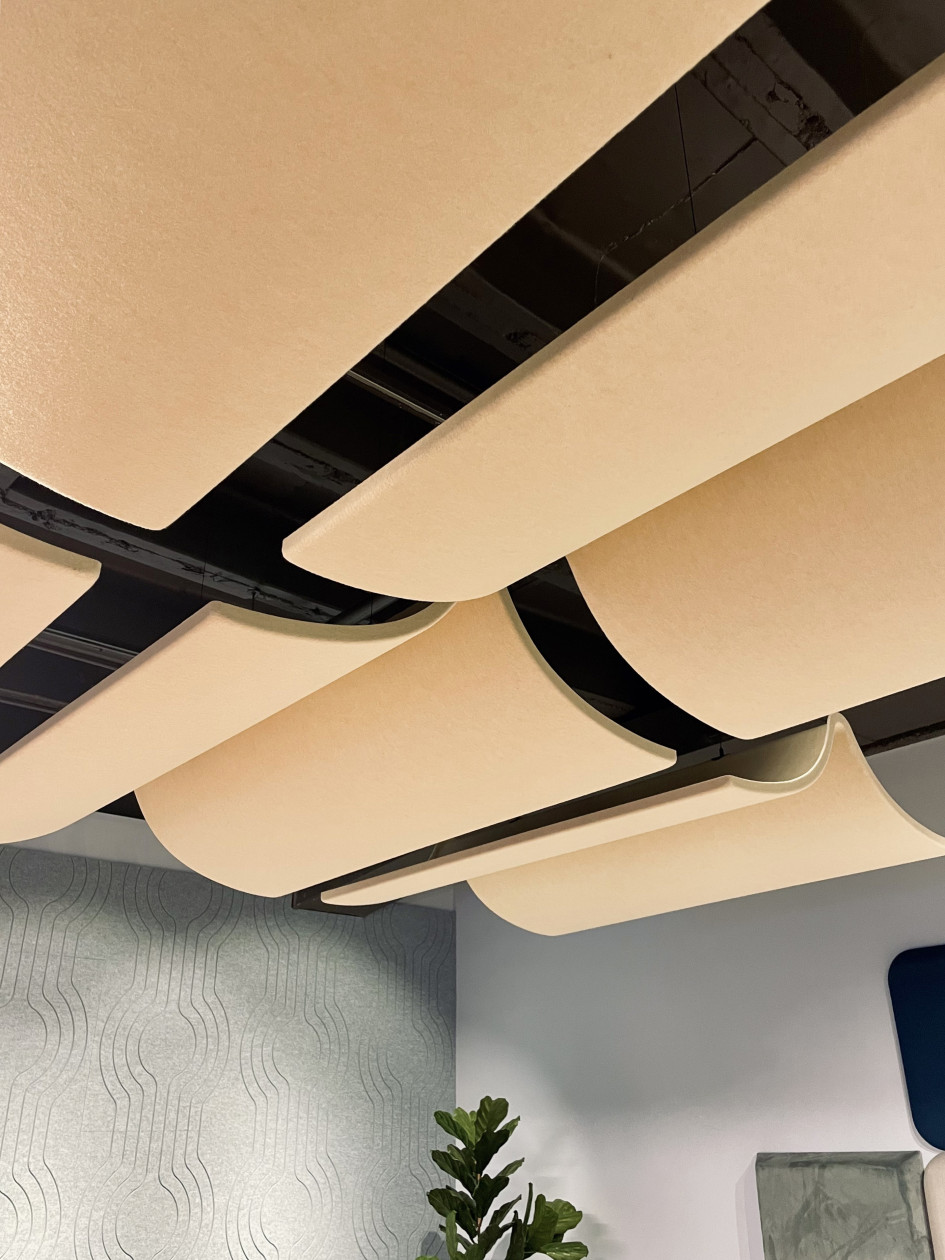
When designing a large acoustic ceiling, one can choose to have some rows with or without lighting, or simply place a few lighting modules to brighten the space here and there. The suspensions can be placed right against the ceiling to save space or hung further down as needed.
The modules have been designed so that they can be placed next to each other. In that case, the large curves visually connect to each other. They can also be spread apart so that cables and sprinklers can pass through, and people can have easy access to the ceiling. The profiles' curves always have a straight line at the end, so even if there is a gap between modules, they still visually connect. The ability to easily create a gap between the suspensions without breaking the visual connection means people can arrange the elements more or less spread apart, creating a more or less dense ceiling.
The collection has been designed to offer versatility, ease of mounting and dismantling, and to take into account the end of the product's life from the start.