JUMBO CHAIR
MOGG
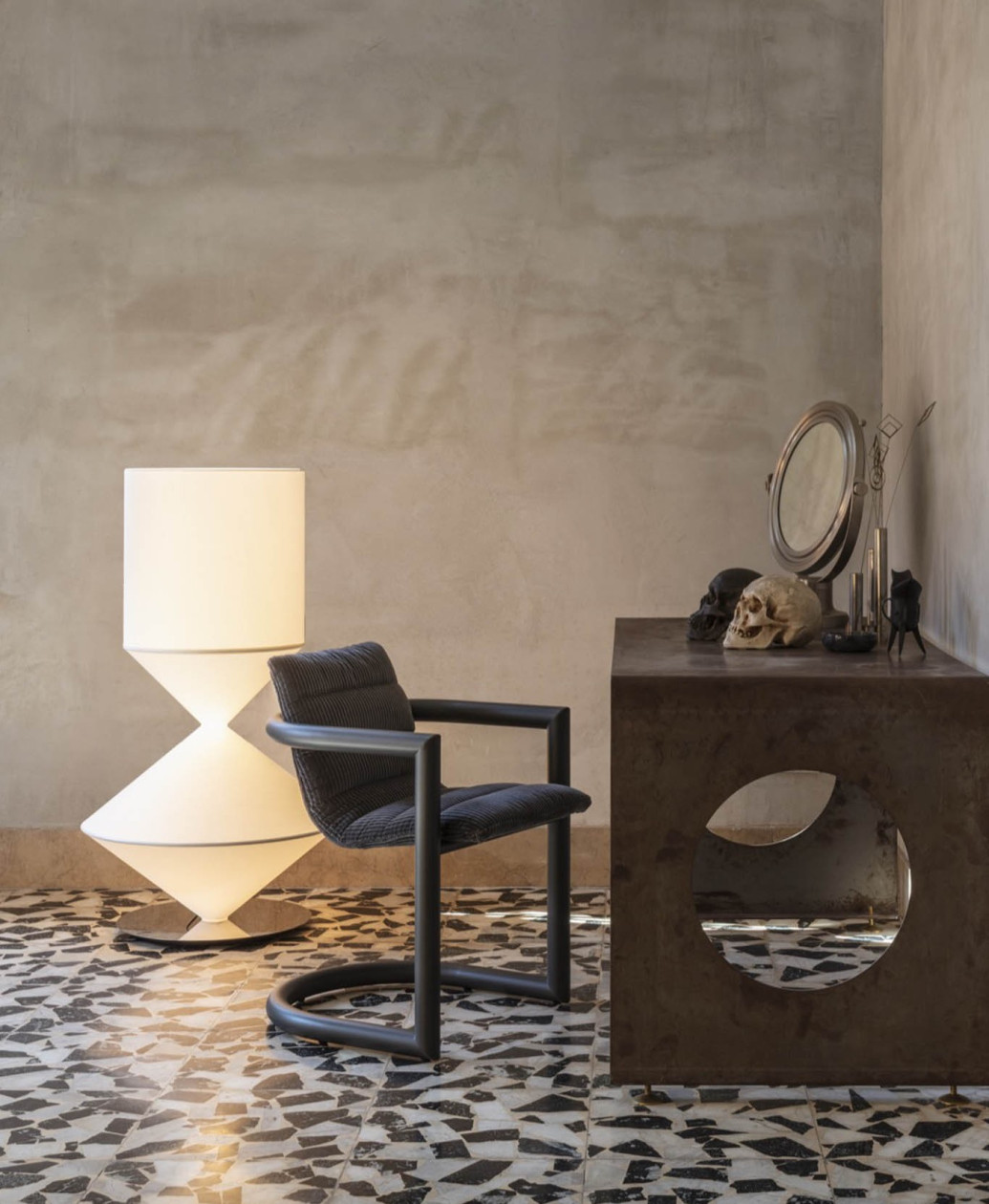
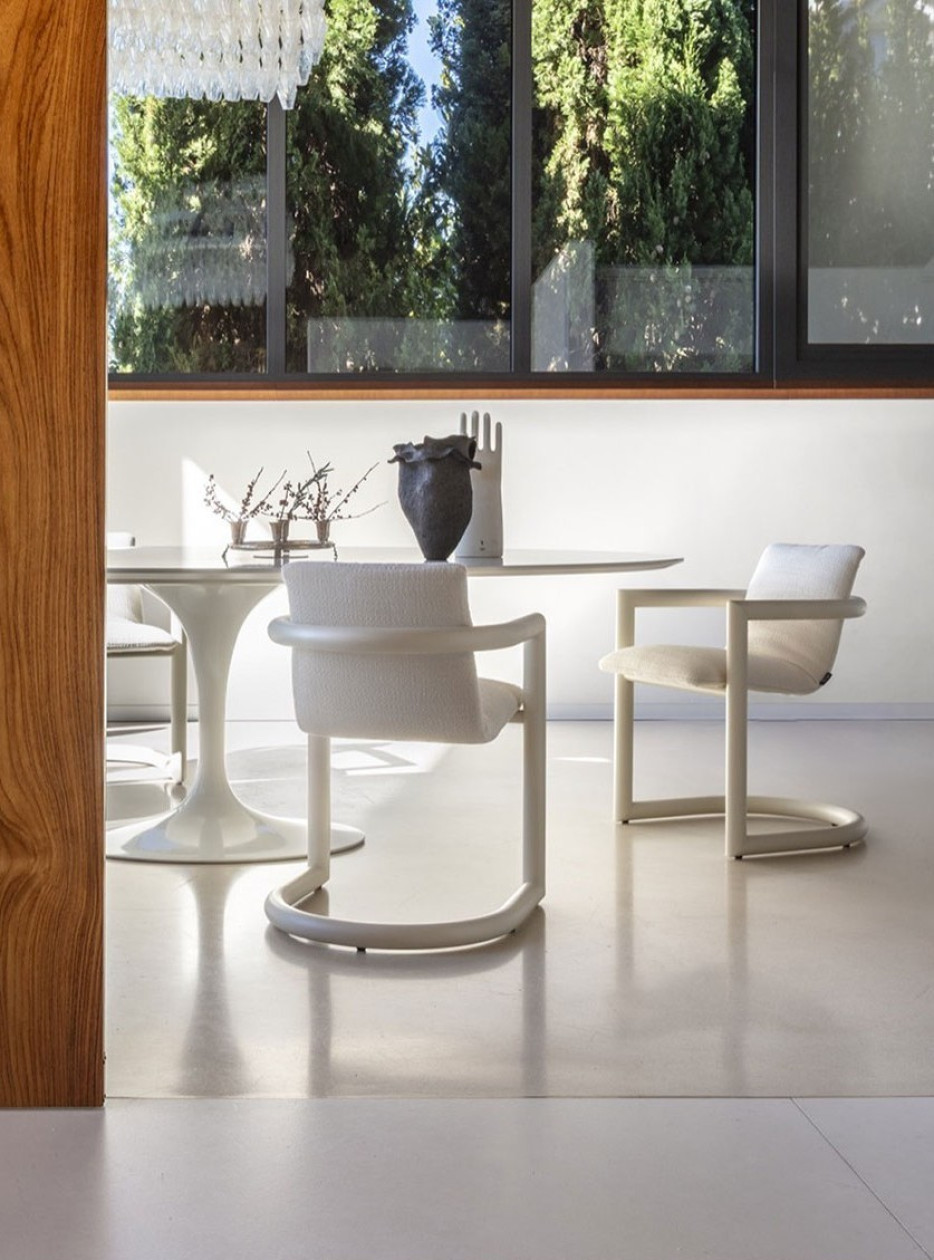
Taking cues from the history of the cantilever chair, the Jumbo chair reimagines its architecture and construction logic to offer a fresh, bold vision.
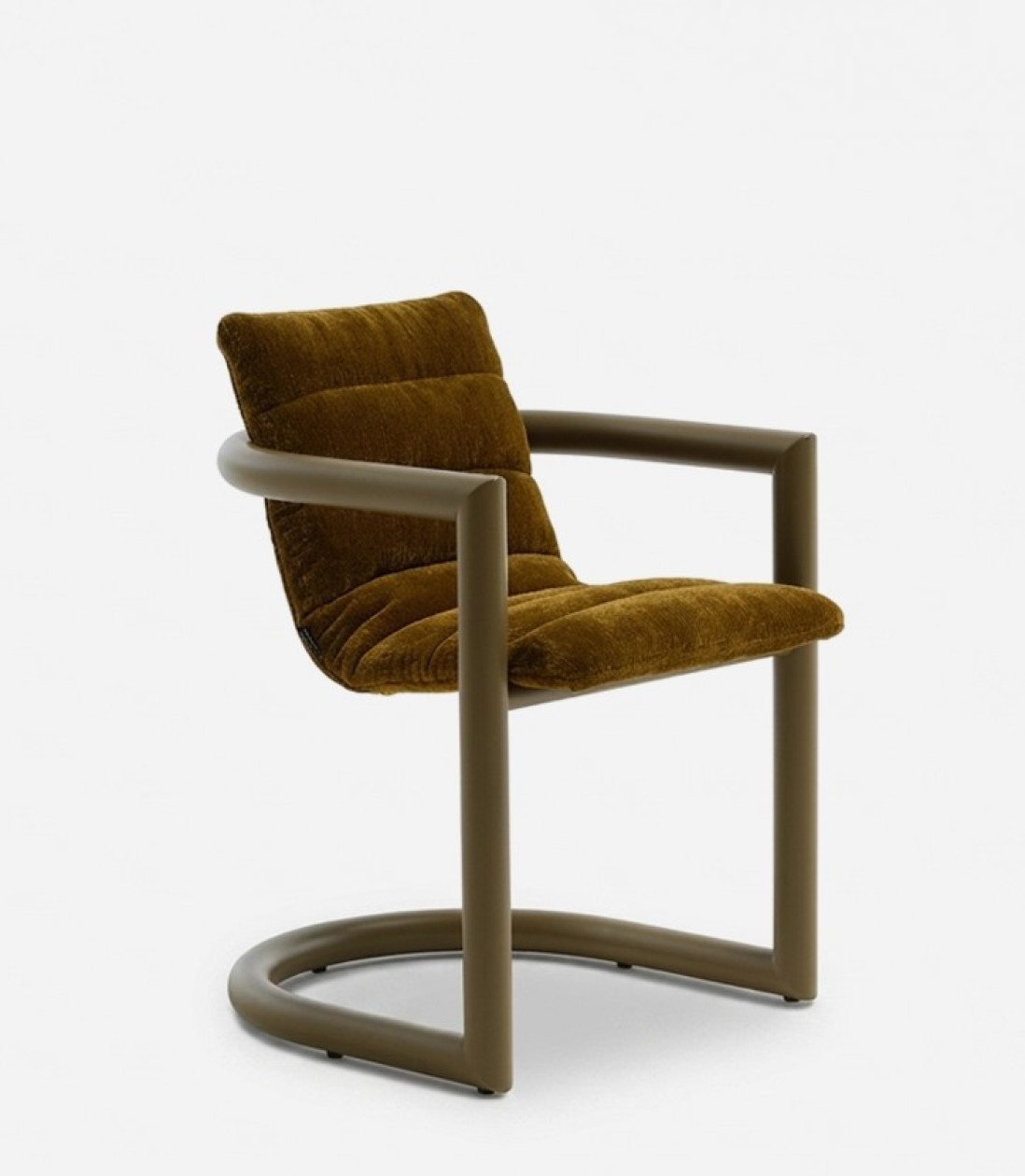
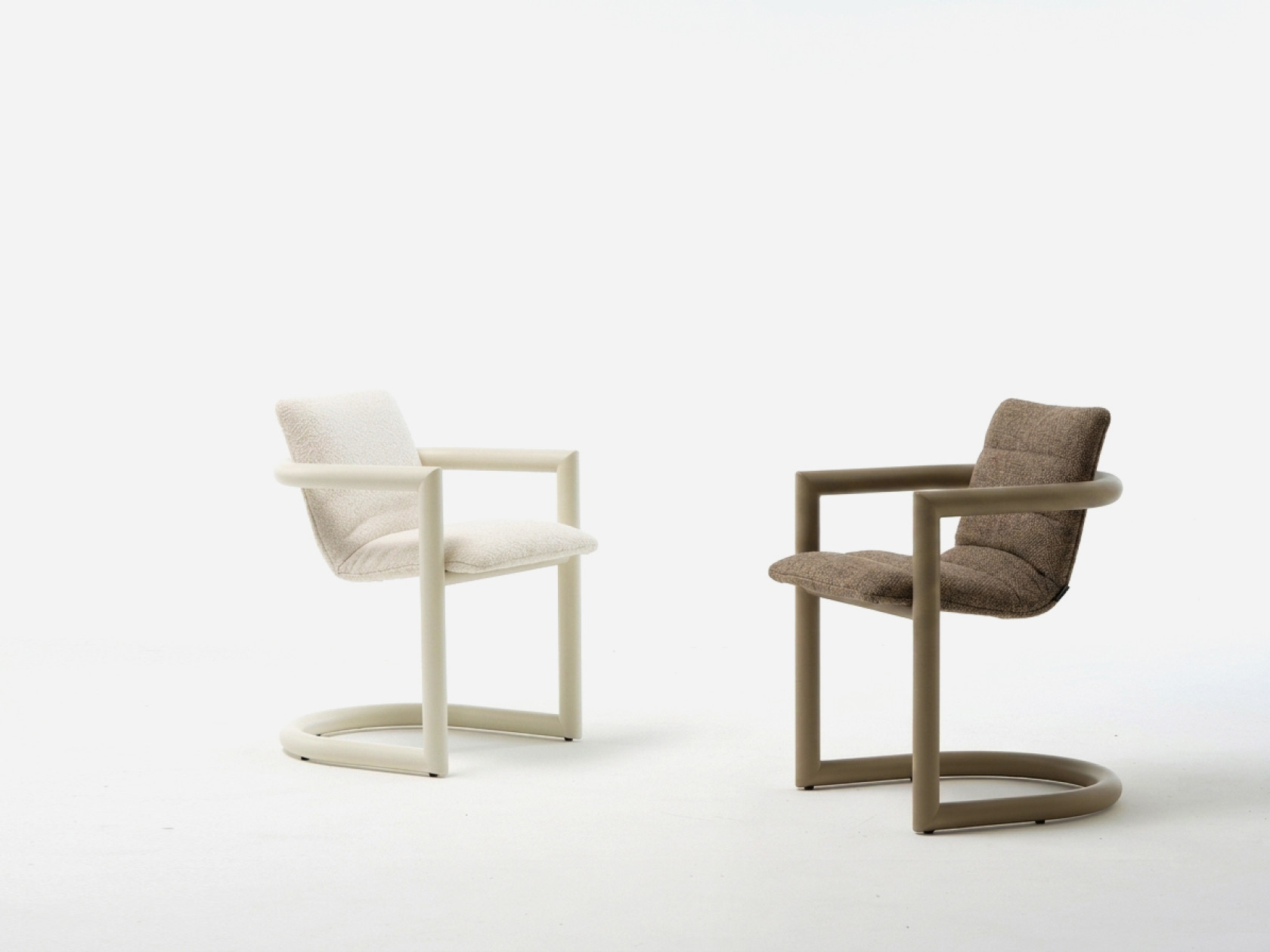
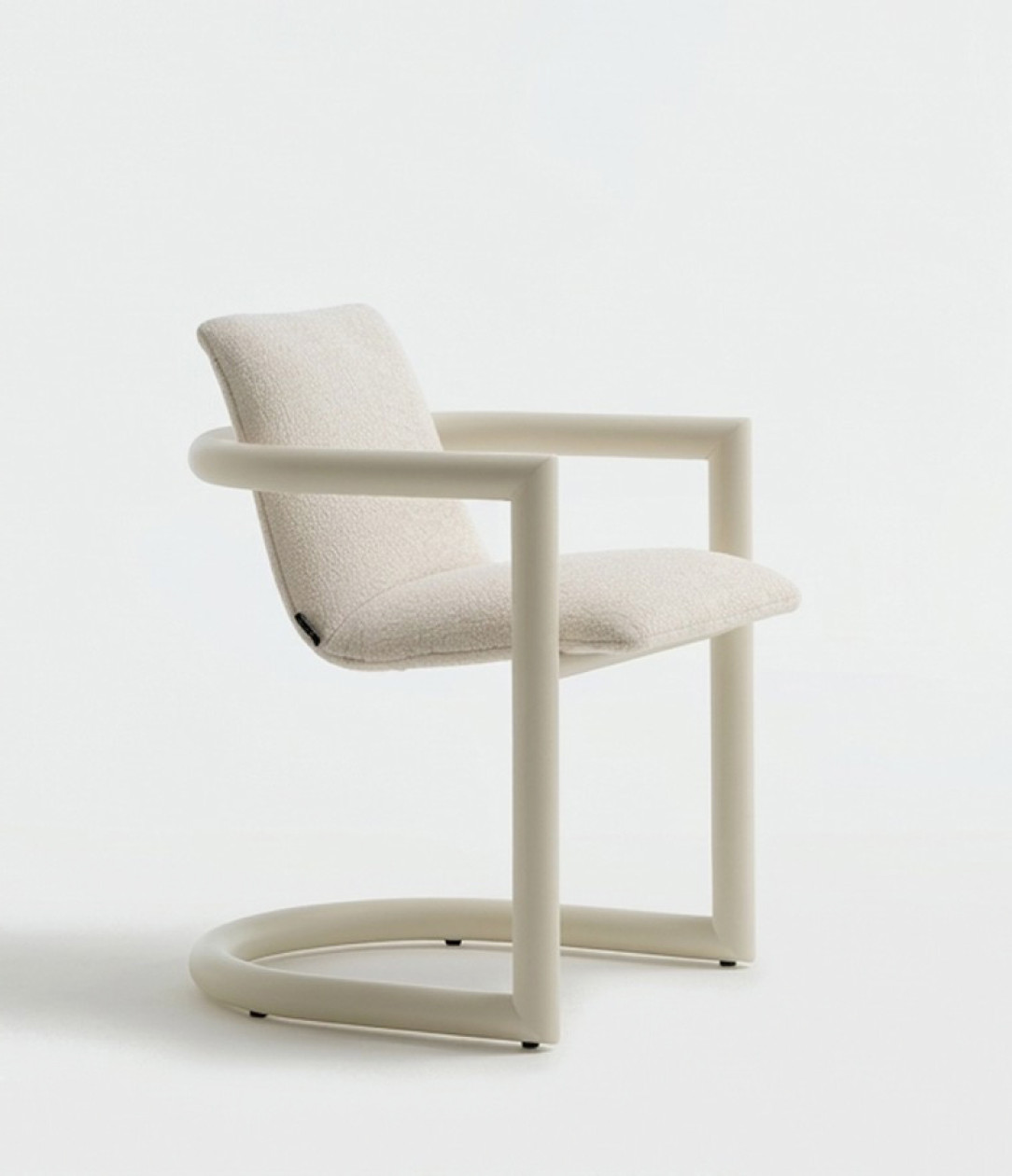
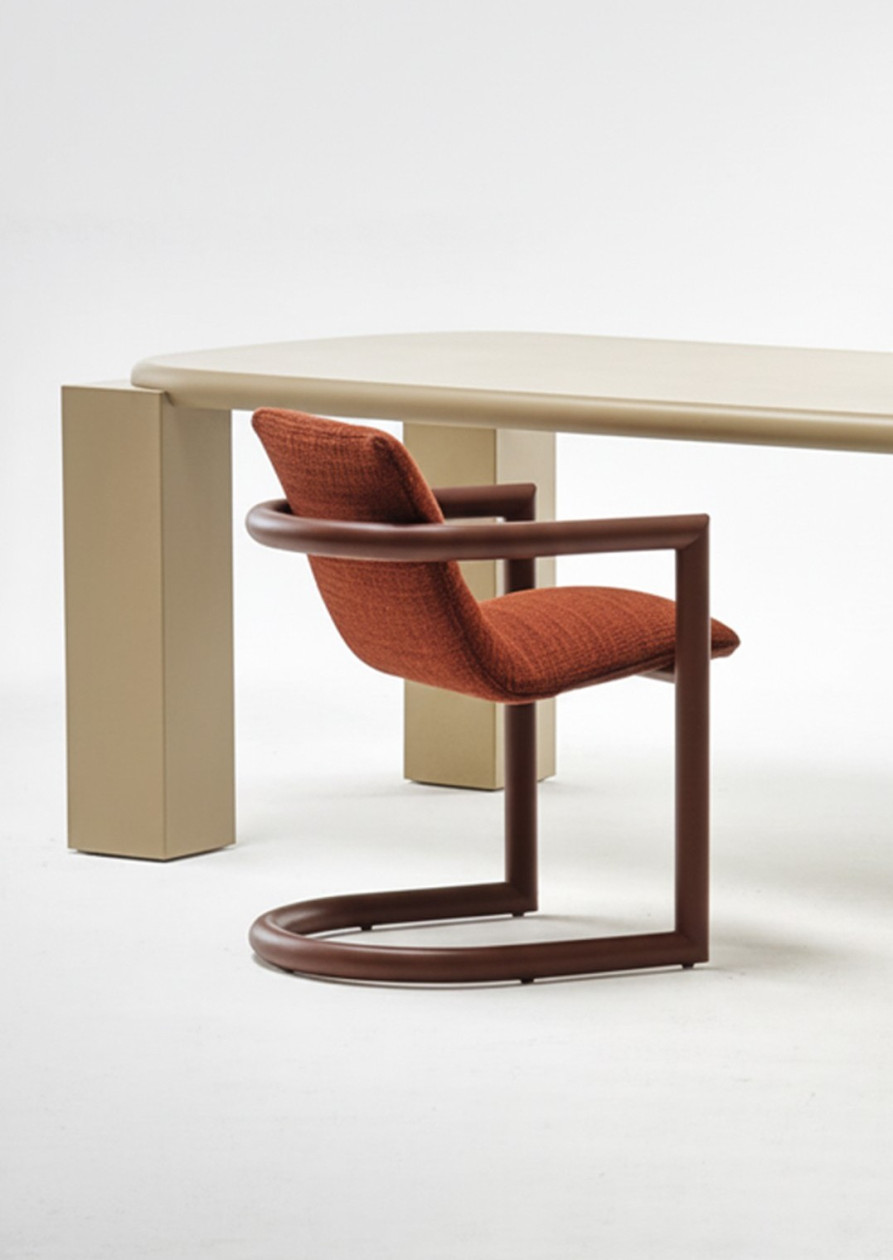
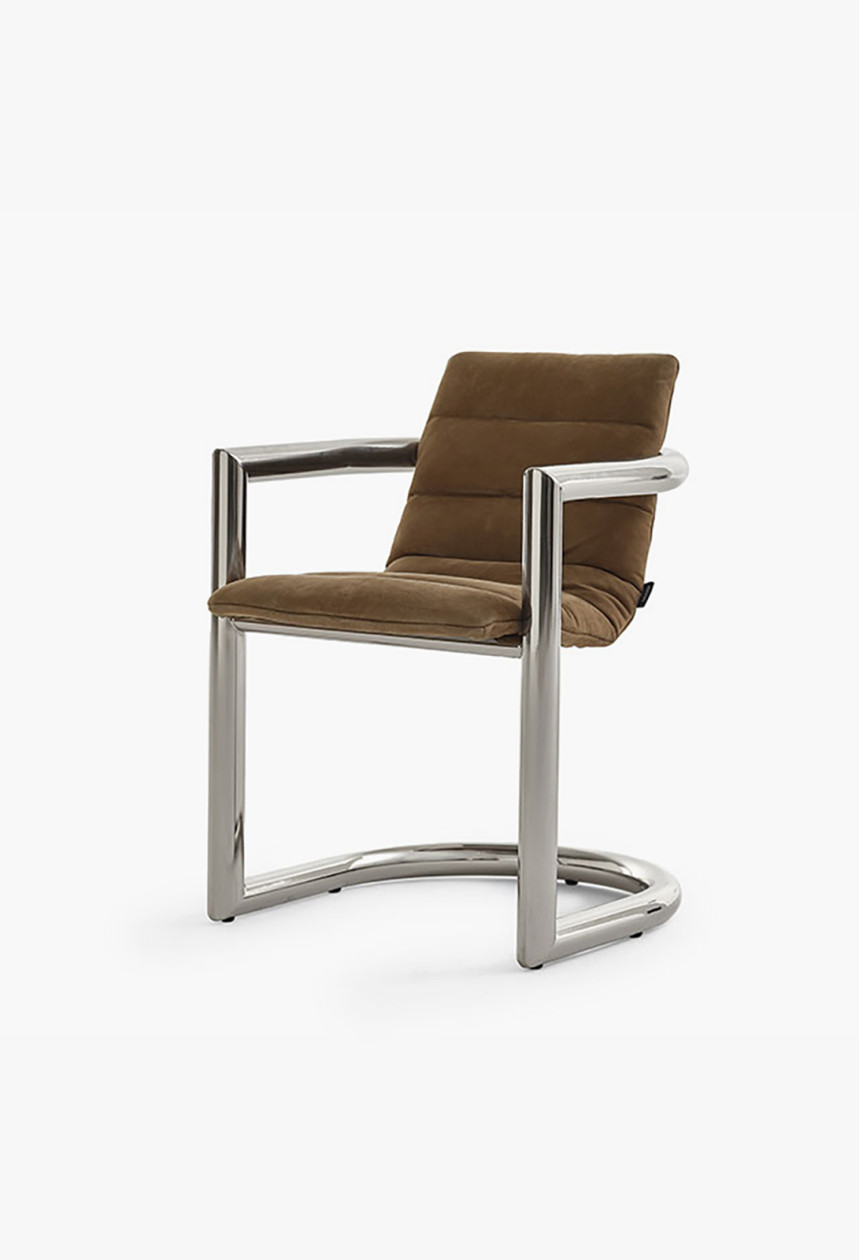
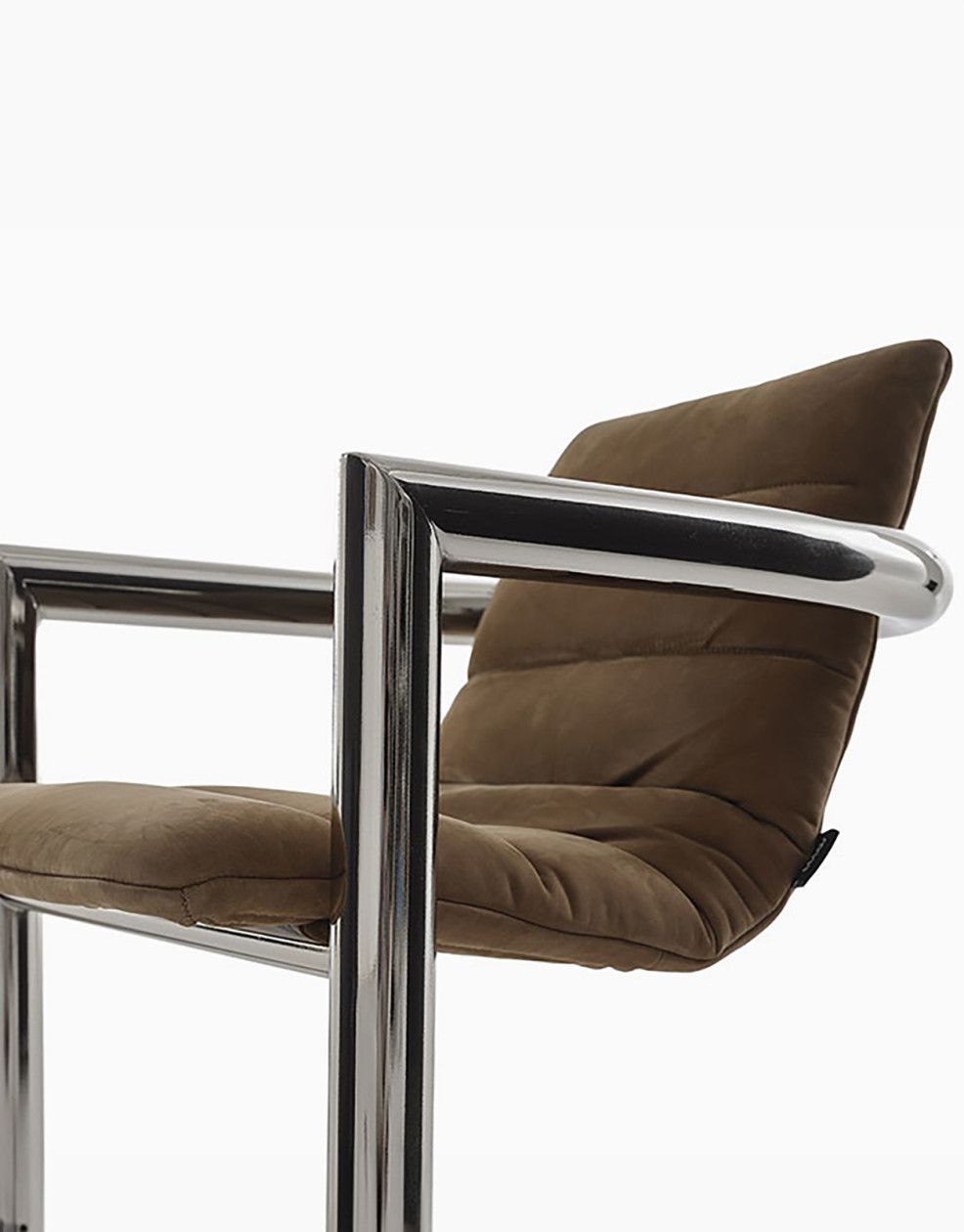
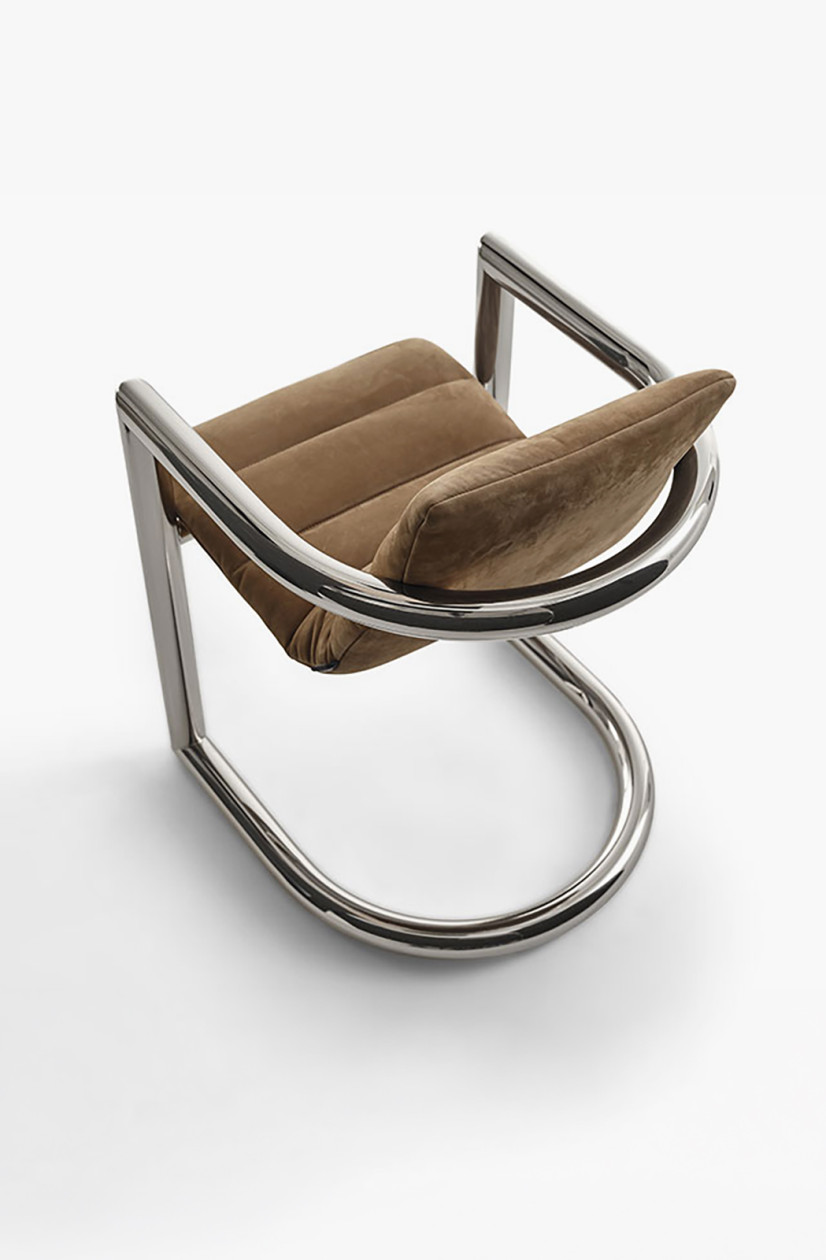
Building on the pioneering work of Mart Stam, Ludwig Mies van der Rohe, and Marcel Breuer, the chair reimagines the design and production processes of the cantilever chair. The metal tube that defines the chair's structure is no longer the thin, bent tube typical of these pieces; it is now a large, bold tube made of four meticulously welded parts. The base and armrests are two identical, graphic, and geometric pieces that give the impression that the piece has been mirrored. These two arches are connected by tubes, forming a complete structure that supports the seat.
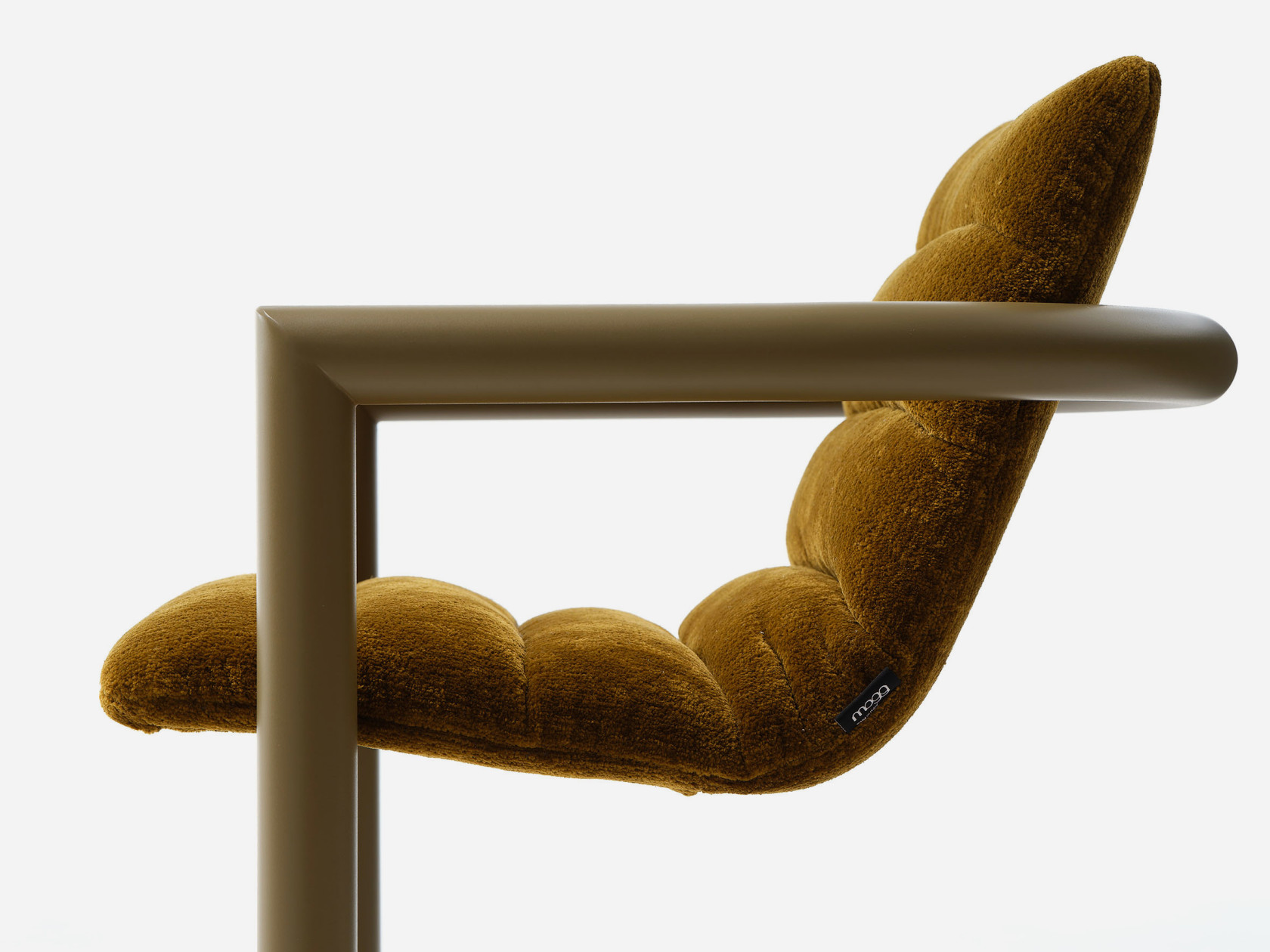
The seat is designed to appear as if it is floating inside the structure by magic. It is supported in an almost invisible way from below. The backrest is not attached to the structure; it barely rests on the curved backrest. The slight curve of the backrest is intended to complement the curve of the tube at the back as much as it is meant for comfort.
The seat has two different personalities since people can choose between two removable cover designs. One has seven large ribs and looks slightly more historic, while the other has fabric stitched only at the intersection of the backrest and seat, making it appear as if two separate cushions were combined.
The Jumbo Chair is an exercise in balance and a little world by itself where softness and warmth collide with structural rigidity and graphic strength.